
With Complete Unknown out in theatres Bob Dylan, folk music and the Newport Folk Festival is back in the American consciousness. Here at Cigar Jukebox, we will endeavour to have one feature article a week about African-American music during Black History Month. Even though African-American artists are making history and inspiring millions all the time, it is important to reflect on those whose history has been silenced by white supremacist histories and policies. it is always important to reflect on our musical history, especially now when DEI and Black History events are under threat.
The renaissance of folk music in the 50s and 60s centred on Greenwich Village and the rise of the white singer songwriter…Bob Dylan, Joan Baez and John Prine became the faces of a growing genre. Newport Folk Festival also started around this time in 1959 by Pete Seeger and George Wein. Seeger and Wein were well versed in folk and understood not only its European roots, but also its strong connection to the African oral / musical tradition prominant in the south during slavery. They saw connections between folk, gospel and blues traditions, which led to showcasing numerous African-American artists throughout the festival’s history. Moreover, Seeger was keen to showcase protest singers and African-American activists throughout the 60s during the Civil Rights movement.
Now, don’t get me wrong…Newport Folk Festival was not without fault. Artists like Bob Dylan and Johnny Cash had a history of appropriating blues music without credit and many of the headliners were white musicians, while African-American musicians were opening acts. Having said that, both the audience and the artists at Newport were far more mixed than the rest of American society. Let’s look at some of the artists who played Newport and showed how folk was a deep and diverse genre.

Odetta: If I had a Hammer (Live)
This folk classic would be something she probably would have played at Newport. The strength and passion in her vocal is spiritual. The self-described “artivist” took her message of love, equality and freedom with her each time she took the stage. Odetta was not only a force in music, but also in the Civil Rights Movement, which inspired millions.
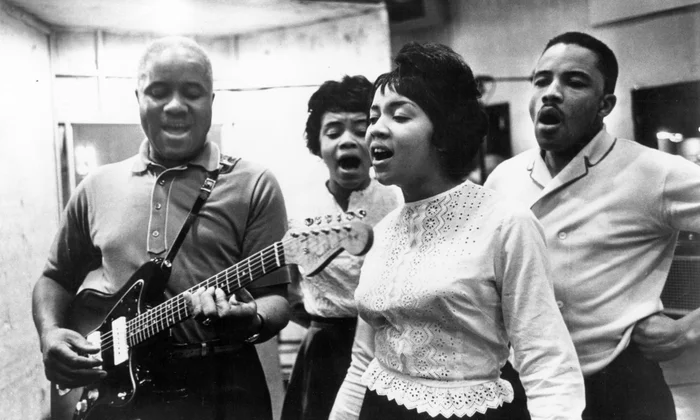
The Staples Singers: This Train
Their mix of folk, gospel and soul made the Staple Singers a standout at the Newport Folk Festival. Roebuck “Pops” Staples led the band, whose most famous member Mavis Staples would go onto play the festival as a solo artist. Seeger was a huge fan of the Staples Singers and their set in 1964 influenced countless artists at the festival and helped bring the Civil Rights Movement to the folk community.

The Freedom Singers: We Shall Overcome
The Freedom Singers came to Newport in 1963 and recorded their only record with Mercury Records in the same year. Their raw and passionate gospel vocals calling for civil rights and justice for the oppressed took the festival by storm. Near the end of their set in 1963, they linked arms with Bob Dylan, Joan Baez, Pete Seeger and many other musicians during their rendition of We Shall Overcome. This iconic performance is still one of the top 5 performances of the festival.

Killer Mike: Don’t Let the Devil
Ok. I had to go current on at least one. Even though Wein is no longer producing the festival, the Newport Folk Festival continues to this day and in 2024 it was Killer Mike’s turn to take the stage. Peter Seeger always saw folk as speaking for the people and challenging the power…I mean…he was charged with sedition for This Land is Your Land…he was blacklisted. Seeger would have loved Killer Mike’s unrelenting challenge to power and social activism.

Robert Pete Williams: Graveyard Blues
Newport Folk Festival has a long history of showcasing blues singers. Robert Pete Williams played in 1964 and stayed in a legendary house rented by Wein. Known as the “blues house” iconic artists like Muddy Waters, Mississippi John Hurt, Elizabeth Cotton and many others stayed in the house during the festival. When not on stage, there would often be blues jams with both African-American and white artists on the front porch to an audience sprawled out on the yard. It was like its own festival within the festival.
 CigarJukebox
0 comments on “Black History Month: The History of African-American Artists at Newport Folk Festival”