
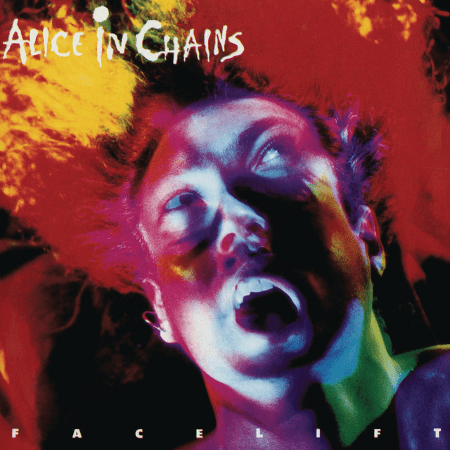
I have a soft spot for rock and punk coming out around the time of, or slightly after, Nirvana’s Nevermind. You see, there was this brief period…before everyone just tried to copy Nirvana…badly I might add…I’m looking at you Bush…that rock was the wild west. If Nirvana could sell, let’s give anything a go. From 1990 – 1993ish it was all up for grabs. There was this influx of new genres and fresh bands in rock. You had Nine Inch Nails, Ministry, Soundgarden, The Smashing Pumpkins, Pearl Jam, Tool, L7, Radiohead, Jane’s Addiction, Rage Against the Machine, PJ Hervey and The Melvins all getting major records out. This brief period turned rock upside down until hip hop totally flattened it in the late 90s, but that’s another story. However, for that brief period, rock was changing right in front of our eyes. One band that capitalised off of this new thirst for alt rock was Alice in Chains.
The band itself started out as a glam rock band in the late 80s called the Sleaze. When that didn’t take off the band broke up and the lead vocalist Layne Stanley, who tragically passed away of a drug overdose in 2002 at 34, took some members and formed a funk band. They would kick around for a few years until they formed Alice in Chains and the Facelift demo got them their big break. We will look at the biggest track off that record, and the track that made the band megastars, Man in the Box.
The blend of glam and funk characteristics in a time of the grunge explosion made for and interesting musical landscape. The 90s crunchy guitar is definitely there in full effect, but there are these flourishes of something more. There are these competing genre notes that seemed to come together in some musical witch’s brew. You had full on guitar solos that sounded like something off of Van Halen’s 1984, which was just not a thing you did in the 90s if you wanted to be cool. Moreover, there was this funk wah wah pedal guitar that had a hint of the Ohio Players about it. This mix of genre influences set Alice in Chains apart from cookie cutter pop that was around at the time. Most importantly, there was a snap in the percussion that gave the track a spine and a drive. Without that snap cutting through all the guitar, you could find yourself crushed under its weight. When you look at the landscape of music at this time, Alice in Chains was both on the cutting edge and a throwback.
Having said all of that, the musical idiosyncrasies of the track was not what made Alice in Chains more than just a one hit wonder, it was Stanley’s vocal. Stanley was an intoxicating mix of a garbled drawl (even though he was born in Washington state), funky twang and someone drowning in quicksand. It was this muddy vocal that brought the whole track together and gave it a raw emotional power. Lyrically, there are religious references and illusions to being saved, which is interesting when looking at Stanley’s life and the lows he would hit during his drug use. This muddy vocal not only helped usher in the grunge sound, but became the calling card for the band.
There are current tracks like Dax Riggs’ Deceiver that clearly take inspiration from Alice in Chains, which shows the band’s mark on music. The mid 90s is full of gimmicky B-grade grunge cash-ins that people forgot about almost as soon as their records came out…I’m looking at you Smash Mouth… However, Alice in Chains made a lasting impact on music and were one of the bands that made the early 90s a very exciting time for rock.
Listen to Man in the Box
 CigarJukebox
0 comments on “Retro Review: Alice in Chains’ Man in the Box: The Rise of Mud Metal”