
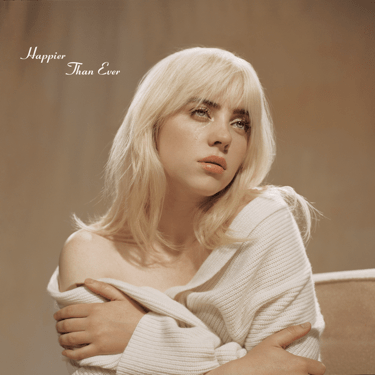
Billie Eilish has lost the green hair and taken the challenge thrown down by The Chicks, Fiona Apple, Taylor Swift, Beyoncé and decades of women’s music before her. Similar to Dolly Parton, Carly Simon and Aretha Franklin in the 60s and 70s, as well as Ani DiFranco in the 1990s, Eilish is taking on male power in her music.
Feminism has gone through music history in a variety of themes and structures. Dolly Parton and Kitty Wells took male dominated ballads and turned the lens back on the women left behind. Aretha Franklin, Beyoncé and Missy Elliott pushed the evolution of feminism into intersectional themes of gender and race. While Ani DiFranco took intersectional feminism one step further when she explored feminism’s relationship with LGBTIQ+ issues. In the late 1990s and 2000s feminist themes were largely invisible in pop and were more prevalent in Riot Grrrl and indie music. However, 2016 marked a return to feminist themes to the mainstream with Beyoncé’s instant classic Lemonade, which was followed in 2020 with The Chick’s Gaslighter and Taylor Swift’s ground breaking record folkore.
Billie Eilish continues to push feminist themes in modern pop with her latest single Your Power. Eilish has always championed marginalised people and feminist themes indirectly with her powerful creativity and strong voice. However, Your Power marks a direct shot at the patriarchy that has not been evident in her previous work. In the track she sings about a relationship where her male partner uses his power to control and imprison her. Lyrics such as: “Try not to abuse your power…Does it keep you in control? / For you to keep her in a cage?” bring feminist themes of power to the forefront. In this relationship he uses his power to control and dominate her. Even though Billie couches feminist themes within this personal story of a relationship, it draws upon universal themes of men using power and privilege to control / abuse women.
Eilish’s ability to take larger issues of violence towards women and the patriarchy and house them within this personal story gives the track an effective emotional hook. Much like Gaslighter and folklore, Your Power depicts the emotional toll male power / entitlement has on women. This not only makes such large social issues easier for listeners to connect with, but it also gives the track a strong emotional current.
What really makes the track to me is the restrained instrumentation. The track is largely acoustic guitar and strings set against an edgy bass line combined with vocal effects in post. The lack of overpowering electronic beats draws you to the lyrics, which gives them an added power which would have been lost in an overproduced track. However, the edgy bass is still there to remind you that this is definitely a Billie Eilish track. The combination of acoustic tropes with Billie’s telltale bass is an effective fusion of her new sound with her established musical voice.
You can draw a straight line between Gaslighter, folklore and My Power. I love Billie expanding her sound and lyrical landscape, while still keeping the electronic and vocal sound we connected with on the When we Fall Asleep, Where do we Go? record. With Your Power as the lead single off the record, I am very excited to see what comes next.
Listen to Your Power
 CigarJukebox
Pingback: Prime Time Jukebox Episode 37: Out of the Comfort Zone #2 – CigarJukebox
[August 4, 2024] Dave Burck and Dave Brubeck – the difference in letters in surnames is BE – Billie Eilish! I’m a 70 yr old fan who saw Billie live in St. Paul, MN on March 15, 2022, my first concert in over 40 years. I went alone and there were actually older adults present at the Xcel Energy Center. I like your article, and wondered what your reflections on Billie Eilish’s career and legacy would be today – this is just after her featuring on Charlie XCX’s “GUESS” and her new album “Hit ME HARD AND SOFT”. So much has happened in the 3 yrs. and 3 months since you wrote this – HTE came out shortly after, but then “WHAT WAS I MADE FOR?” in July 2023 – the one intangible and secret ingredient you never mention is someone named Finneas O’Connell. I believe HMHAS is – for me – another classic and “Bittersuite” [Suite as a musical suite and not just a hotel room] and “Blue” [think of it – incorporating “True Blue” by 14 yr. old Billie and the only imagined “Born Blue” {thought up during the HTE process} – two unrelated songs that – I’m not 100 % objective! – are incredible, and then throw in “Chihiro” – or Skinny, and Lunch as spices in the recipe and it is still in my mind a formula for empowerment. However, perhaps in relationship to her neuro-specificity [synesthesia, perhaps depression, Tourette’s, etc] Billie is averse to all labelling – irregardless of the category or affiliation – music, gender, politics – I truly believe Billie does not – perhaps I’m being naive – have an alternative agenda – this may sound terrible: but she is SURVIVING and LIVING LIFE as a young adult in the way that she NEEDS to make it in this life – and it is authentic, unique … I refer to Billie as a hapax phenomenon – there are many “bright” artists, many get the label “genius” – they are overly used in my mind … the uniqueness of Billie is that she truly hears music in her head differently filtered through her life experiences and intertwined with Finneas’s creativity and look what we have received – it’s all a matter of taste, you could say, but I think there is very little deceit or guile in Billie – at least on any conscious level; on an unconscious level, we’ll see how it all pans out over the years. By the way, I stopped smoking cigars on Oct. 20, 2008 and I think my life has been unhappier ever since – I’ve gained weight, become more sluggish and often have dreams where miss smoking cigars – I should write a song about it.
LikeLike
Your last sentence sounds like the making of a good country song.
LikeLike